Efficient battery slurry production depends on more than simply combining active material, conductive additives, binders, and solvents. The process must wet powders effectively, break down agglomerates, distribute components uniformly, and maintain stable slurry properties before coating.
For this reason, selecting a battery manufacturing mixer requires manufacturers to consider both mixing and dispersion performance. Conventional batch mixing, high-speed dispersion, and continuous mixing each solve different process challenges, and the right configuration depends on formulation, throughput, viscosity, solid content, and production strategy.
What Is the Difference Between Mixing and Dispersion in Battery Production?
Mixing distributes different materials throughout the slurry, while dispersion applies sufficient shear to break down agglomerates and distribute fine particles more uniformly within the liquid phase.
The distinction is important because a slurry may appear macroscopically uniform while still containing poorly dispersed conductive carbon or other particle clusters.
During electrode slurry preparation, powders must first contact and become wetted by the liquid phase. The mixing process then distributes the ingredients, while higher shear forces help separate agglomerated particles and create a more stable microstructure.
A dispersion mixer is therefore particularly valuable when the formulation contains fine powders that are difficult to wet or naturally tend to form agglomerates.
Better dispersion can support more consistent slurry viscosity, coating stability, and electrode uniformity. However, simply increasing mixer speed is not always beneficial. Excessive shear or temperature rise can affect sensitive materials and change the rheological behavior of the slurry.
How Does Mixing Quality Affect Battery Electrode Production?
Mixing quality directly influences how consistently slurry can be transferred, filtered, coated, and dried during downstream electrode production.
A poorly prepared slurry may produce unstable viscosity, particle agglomeration, uneven conductive-agent distribution, or inconsistent solid content. These problems can later appear as coating defects or differences between production batches.
The objective of a battery mixing process is therefore not maximum shear. It is controlled and repeatable energy input.
A suitable battery manufacturing mixer should provide enough circulation to prevent stagnant zones while supplying the shear required for the formulation. Mixer design also needs to account for slurry viscosity changes during different stages of powder addition and solvent incorporation.
For manufacturers scaling from laboratory formulas to industrial production, maintaining comparable mixing conditions is often more important than simply increasing vessel volume.
When Should a High-Speed Dispersion Mixer Be Used?
High-speed dispersion is particularly useful when rapid powder wetting and agglomerate reduction are important to slurry quality.
A high-speed dispersion mixer creates strong local shear and circulation, allowing powder to contact the liquid phase more efficiently. This can be useful for LFP, NCM, graphite, conductive carbon, ceramic, and other slurry systems where particle distribution affects downstream processing.
In practice, dispersion does not always need to replace the main mixing process.
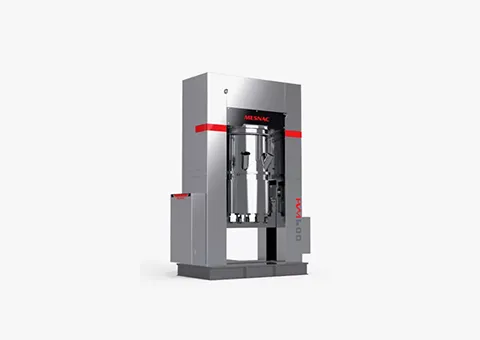
High-speed dispersion mixers can also be used as a secondary process after conventional batch mixing or continuous mixing. In this configuration, the first stage completes bulk material incorporation, while the dispersion stage further improves particle distribution before slurry enters storage or coating equipment.
This separation of functions can be more efficient than requiring one machine to perform every stage under the same operating conditions.
Batch Mixing or Continuous Mixing: Which Is Better?
Neither process is universally better. Batch mixing offers flexibility and straightforward recipe control, while continuous mixing can provide higher production efficiency when formulations and operating conditions are stable.
Batch Mixing
Batch systems remain useful when manufacturers produce several formulations, frequently adjust recipes, or require clearly separated production lots.
Materials are introduced according to a defined sequence, and mixing parameters can be adjusted during individual process stages. This flexibility makes batch systems suitable for many battery slurry production environments.
The main limitation is cycle time. Charging, mixing, discharge, cleaning, and preparation for the next batch all affect overall capacity.
Continuous Mixing
Continuous mixers feed powders and liquids into the process at controlled rates while slurry is continuously discharged.
For stable, high-volume production, this can reduce waiting time between batches and help manufacturers design a more compact production flow. However, accurate upstream dosing becomes especially important because changes in feed rate can directly influence slurry composition.
Continuous production therefore depends heavily on the coordination of weighing, feeding, mixing, process monitoring, and control systems.
Which Mixing Parameters Matter Most for Battery Slurry?
The most important parameters are those that control particle wetting, shear history, temperature, slurry circulation, and final rheology.
Mixer speed alone does not describe the process sufficiently.
Powder Addition Sequence
The order and rate at which powders, binder solutions, solvents, and additives enter the mixer influence wetting and agglomeration.
Adding fine powder too quickly can create dry pockets or large agglomerates that require additional dispersion later. Controlled feeding helps the mixer use its available shear more effectively.
Shear and Mixing Time
Insufficient energy input may leave particles poorly dispersed, while excessive processing adds unnecessary energy consumption and may increase slurry temperature.
The appropriate combination of mixing time and shear should therefore be determined according to formulation rather than using a fixed operating recipe for every material.
Temperature Control
Mixing generates heat, particularly during high-shear dispersion. Temperature changes can affect viscosity and other slurry properties, making jacket cooling or other temperature-control methods important for repeatable production.
Vacuum and Deaeration
Entrained air can interfere with slurry transfer and coating. Depending on the process, vacuum mixing or a separate deaeration stage may be used to remove trapped gas before the slurry reaches downstream equipment.
How Do You Choose a Mixer for Different Battery Materials?
Mixer selection should begin with the behavior of the complete formulation rather than only the name of the active material.
LFP, NCM, graphite, conductive additives, binders, and solvents differ significantly in particle characteristics and interaction with the liquid phase. Even two formulations based on the same active material may require different processing because of changes in solid content, additive system, or target viscosity.
When evaluating dispersion mixers or other battery mixing equipment, manufacturers should therefore provide representative process data to the equipment supplier.
Important information includes expected production capacity, slurry viscosity range, solid content, raw-material characteristics, batch size, feeding method, and downstream coating requirements.
Pilot testing can also be valuable when a new formulation is introduced. It allows mixing conditions to be evaluated before full-scale equipment parameters are finalized.
Why Should Mixing Be Considered as Part of the Entire Slurry Process?
Mixing performance is strongly influenced by what happens before and after the mixer.
Accurate powder dosing affects formulation consistency. Stable solvent feeding influences solid content. Slurry transfer conditions affect whether a well-dispersed material reaches the coating machine without sedimentation, contamination, or excessive air introduction.
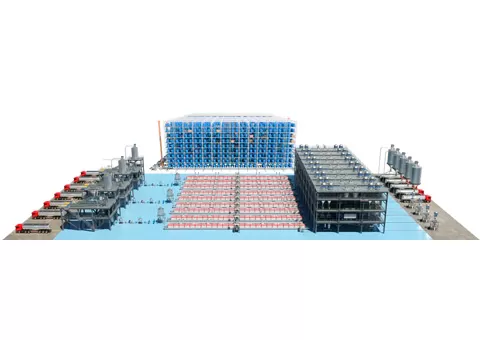
For this reason, an advanced battery mixing line should be designed as an integrated process rather than as an isolated mixer.
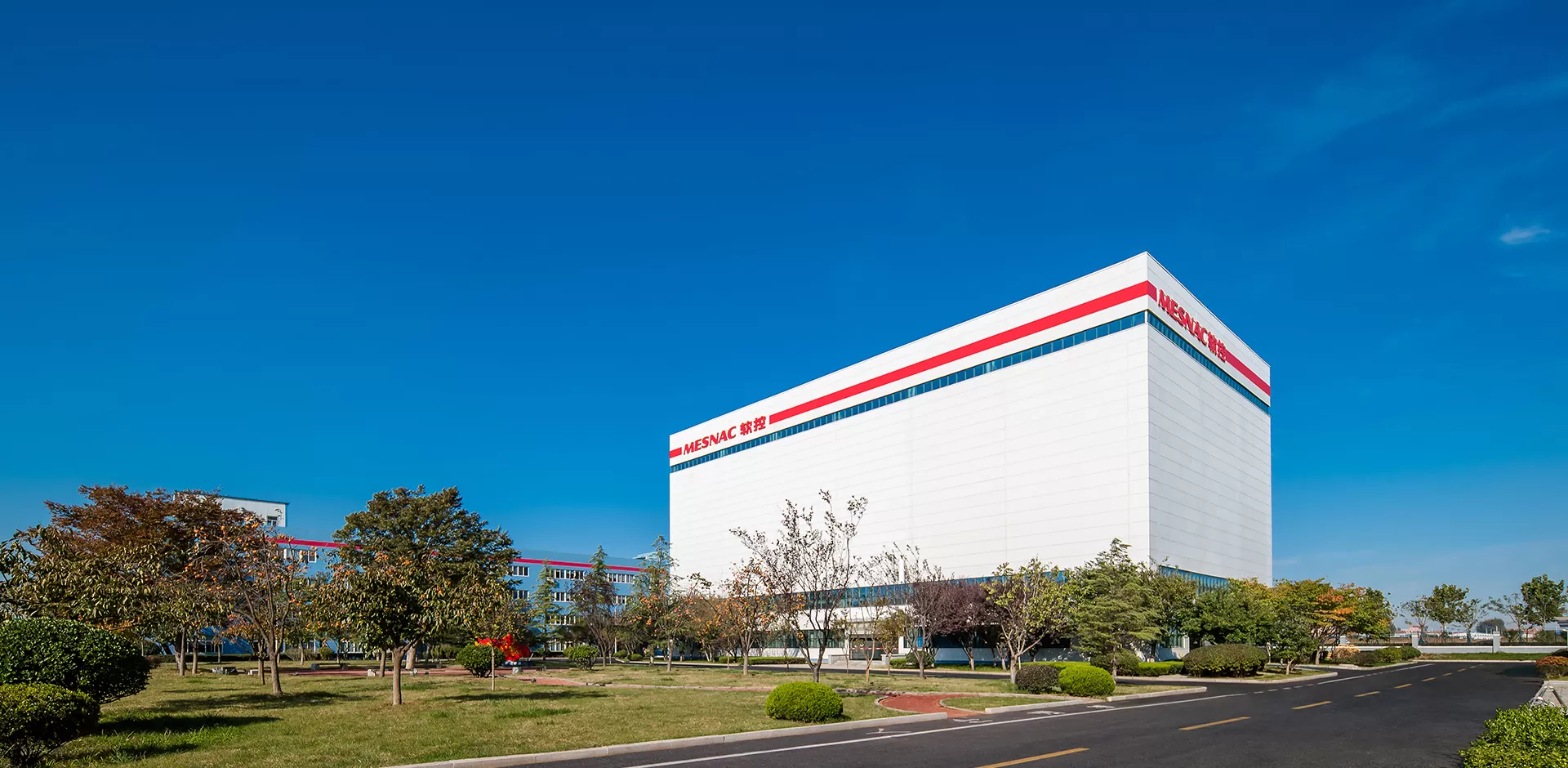
MESNAC's electrode production solutions connect powder and solvent handling with slurry preparation, mixing, downstream processing, and production control. Its mixing portfolio includes PD mixing, high-speed dispersion, and continuous mixing technologies, allowing the process route to be configured around different production requirements.
Conclusion
Battery slurry preparation requires both effective mixing and controlled dispersion. Mixing establishes overall material uniformity, while dispersion addresses particle agglomeration and microscopic distribution.
The best battery manufacturing mixer is therefore not simply the machine with the highest speed or shear rate. Equipment should be selected according to formulation behavior, production capacity, slurry rheology, process sequence, and downstream coating requirements.
For industrial battery production, combining accurate material feeding with suitable mixing and dispersion technology provides a stronger foundation for repeatable slurry quality and stable electrode manufacturing.
FAQs
What is a battery slurry mixer?
It is equipment used to combine active materials, conductive additives, binders, and liquids into a uniform electrode slurry.
Why is dispersion important in battery slurry?
Dispersion helps break down particle agglomerates and distribute fine powders more uniformly throughout the slurry.
What is the difference between a mixer and a disperser?
A mixer primarily distributes materials, while a disperser provides higher shear to break down agglomerates and improve particle distribution.
Can a dispersion mixer be used after another mixer?
Yes. Secondary dispersion is often used after batch or continuous mixing to further improve slurry uniformity.
Is continuous mixing suitable for battery production?
Yes, especially for stable, high-volume production, but it requires accurate and consistent powder and liquid feeding.
What information is needed to select battery mixing equipment?
Typical considerations include material properties, slurry viscosity, solid content, required capacity, production method, and downstream process requirements.



 English
 中文